


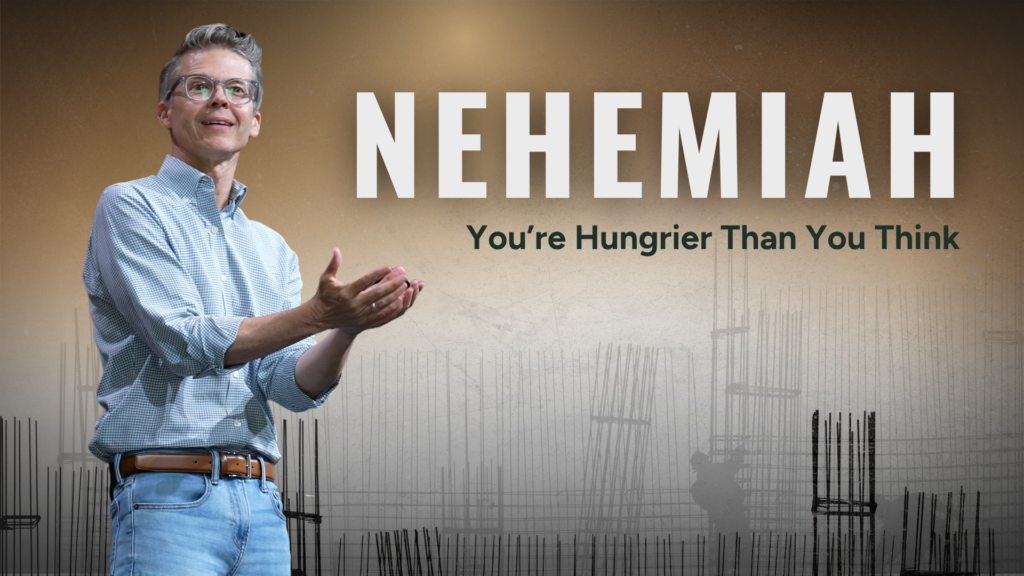
Why Does Reading the Bible Feel Like a Chore?
What You’ll Learn
- Why understanding something — not just hearing it — is what actually changes you
- How to move from knowing about a book to being hungry for it
- What it looks like when grief becomes joy because of something you read
Series Context
This message is part of our series “Rise Up & Build,” walking through the book of Nehemiah. Earlier in the series, we watched God’s people rebuild the walls of Jerusalem. Now comes the harder part: rebuilding their lives. Nehemiah 8 is where the real transformation begins.
Introduction
Most of us have a complicated relationship with the Bible. Maybe you’ve tried to read it and felt lost. Maybe it felt dry, or like something you “should” do but don’t really want to. In Nehemiah 8, 50,000 people decided they were done waiting to be told to read it. They went and asked for it themselves. What they found changed everything.
They didn’t rush through the Word of God. They rushed toward it.
What would make 50,000 people stand for six hours to hear someone read?
In Nehemiah 8, after years of exile and decades of rebuilding, the people of Israel gather in the city square. They’re not there because a preacher told them to come. They asked for it. They said to the teacher Ezra: bring the book. For six straight hours, men, women, and children stood and listened as the scriptures were read aloud. And then something happened. They raised their hands. They bowed their heads. They wept. Not because they were told to. Because they finally understood what they were hearing. When something hits you as true — really true — your body knows it.
What does it actually mean to “reverence” something?
Reverence isn’t a word we use much anymore. But you’ve felt it. It’s the thing that makes you stop talking in a moment that’s clearly bigger than you. In Nehemiah 8, when the book was opened, the crowd stood. Not because they were told to. Because their instincts took over. This is what happens when people come face to face with something genuinely sacred. King Josiah, in 2 Kings 22, tore his clothes when the Word was found after years of being hidden. His grief was a form of honor. Reverence isn’t a performance. It’s recognition.
Why would understanding the Bible make someone cry?
When the people in Nehemiah 8 finally understood what they were hearing, they broke down. Not out of sadness for sadness’ sake, but because they could finally see themselves clearly. God’s Word does that. It’s like a mirror, Pastor Eric says in this sermon — it doesn’t lie. Understanding why things went wrong, seeing your own part in it, and then hearing that grace is still on the table — that combination is overwhelming. The leaders had to tell the crowd three times: “Stop weeping. This is a holy day.” The tears weren’t a problem. They were proof something real had happened.
How do you go from grief to joy?
Nehemiah and Ezra didn’t say, “Just be happier.” They said: understand what God has actually done for you. In Romans 5, the Apostle Paul puts it this way: we rejoice because God has reconciled us through Christ. Rejoicing isn’t about ignoring what’s hard — it’s about knowing something bigger is also true. The people in Nehemiah 8 feasted and celebrated and sent food to their neighbors because they finally grasped what the Lord had done for them. Joy came from understanding. It wasn’t forced. It was found.
What does it look like when people actually share what they find?
In Nehemiah 8, after the people discovered a forgotten feast in the scriptures, they didn’t keep it to themselves. They went into every corner of the city — their homes, their rooftops, the courts of the temple, the city gates — and they built booths to celebrate what God had done. They told their neighbors. They told their kids. They didn’t need a program. They just found something worth sharing. Those who find something real don’t tend to hoard it.
What does it mean to be “hungy” for the Bible?
Jeremiah 15:16 says, “Your words were found, and I ate them, and your words became to me a joy and the delight of my heart.” That’s not polite interest. That’s hunger. The people in Nehemiah 8 came back the next day asking for more. The dads went back to Ezra and said: teach us again. Hunger isn’t a personality type — it’s a response to actually tasting something good. If the Bible has felt flat to you, the question isn’t whether the Bible is good. It’s whether you’ve ever really slowed down long enough to taste it.
Do I need to be religious to get anything out of this sermon?
No. This sermon is for anyone who has ever wondered if there’s more to life than what’s on the surface. It’s for people who are spiritually curious, or spiritually tired, or just looking for something that actually holds up. Pastor Eric doesn’t assume you know the Bible. He walks through the story in plain language and draws out principles that apply whether you’ve been in church your whole life or you just wandered in off the street. If you’ve ever read something that felt more alive than you expected — you’ll get this.
Key Scripture
Nehemiah 8:1, 8, 12 (NIV) — “all the people came together as one in the square before the Water Gate. They told Ezra the teacher of the Law to bring out the Book of the Law of Moses… They read from the Book of the Law of God, making it clear and giving the meaning so that the people understood what was being read… Then all the people went away to eat and drink, to send portions of food and to celebrate with great joy, because they now understood the words that had been made known to them.”
This is a turning point in Israel’s history. The people had just finished rebuilding their city after years of exile. But the walls weren’t the real work. The real work was rebuilding their understanding of who God was and what He had done for them. When that understanding finally arrived, it didn’t produce guilt. It produced joy.
Life Application
- Stop waiting for someone to push you toward the Bible. Ask for it. Start with one chapter. The hunger can begin today.
- When something you read convicts you, stay with it. Don’t move past the discomfort too quickly. That’s where change starts.
- Trade in whatever grief you’re carrying for the joy that comes from understanding what God has actually done for you.
- Share what you find. What you discover in God’s Word is not meant to stop with you.