


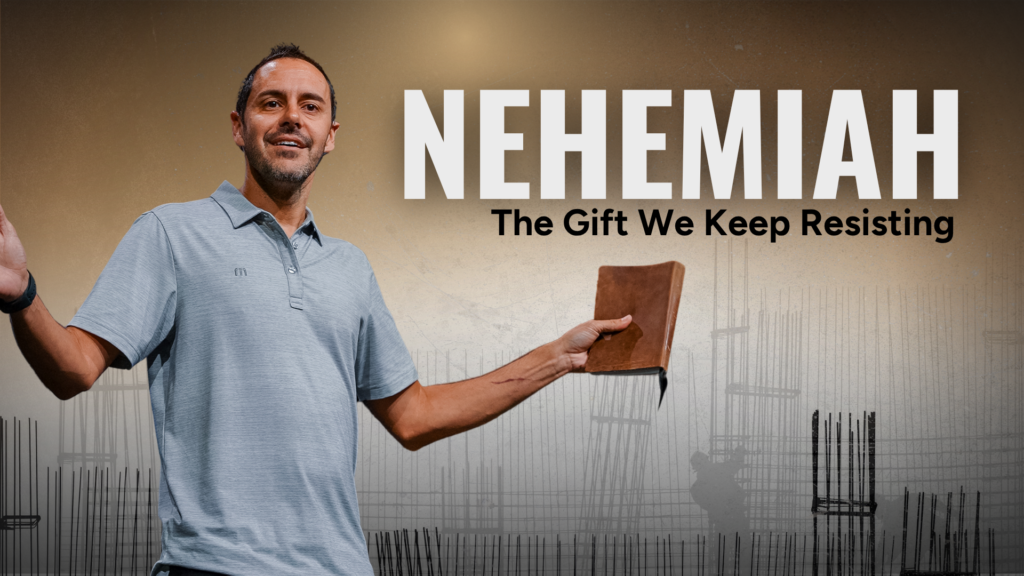
About The Sermon
What if the things you’ve been avoiding are actually the things you need most? In this message from Nehemiah 10, we look at five commitments the people of Israel made to God — and discover that every single one is less a rule and more a gift. Rest. Faithfulness. Limits. Mercy. Generosity. We resist all of them. But here’s the thing: Jesus already kept every promise we couldn’t keep. And because of that, we don’t have to earn our way to the good life — we can finally receive it.
Why does following rules make me feel less free, not more?
Because rules without relationship feel like a cage. The difference between a cage and a home isn’t the walls — it’s who built it and why. The argument from Nehemiah 10 is that God’s commands aren’t designed to limit your life. They’re designed to protect it. When you see a speed limit on a winding mountain road, it’s not there to slow you down for fun. It’s there because someone who knows the road is looking out for you. The problem isn’t the command. The problem is that most of us are trying to follow rules we don’t actually trust. Once trust shows up, the whole thing changes. (Nehemiah 10:29, John 10:10)
Is rest actually that important? I feel like I just don’t have time for it.
The sermon makes a striking point: God commands rest. Not suggests it. Commands it — about 52 days a year, or 7.5 weeks. That’s more time off than most people take in a year. The idea of Sabbath is old, but the need behind it is extremely current. We are exhausted. We are productive machines running on fumes. And God has been saying for thousands of years: You were not made for this pace. Stop. Breathe. Take a long look at what actually matters. Sabbath isn’t a day off. It’s a day to remember who you are and who’s got you. (Nehemiah 10:31, Psalm 46:10)
What does an ancient law about farming have to do with my life today?
More than you’d think. The idea behind letting fields rest every seven years isn’t just good ecology (though it is that). It’s a statement about how we treat the things and people under our care. The earth isn’t ours. Our employees aren’t machines. Our families aren’t means to an end. There’s a rhythm built into life — work and rest, production and recovery — and when we ignore it, things break down. The sermon puts it simply: God cares about souls. He also cares about soil. If you run your team, your land, or your family without limits, something’s going to crack eventually. (Nehemiah 10:31, Psalm 24:1)
I’m carrying a lot of financial stress. Does any of this speak to that?
It does, actually. In ancient Israel, God built debt forgiveness into the legal system. Every seven years, debts were canceled. This wasn’t because debt was always someone’s fault — in fact, most of it came from illness, disaster, or tragedy, not bad decisions. The point was that people matter more than balances. That’s still a radical idea. The sermon connects this to something personal: the most generous thing you can do for someone is pay a debt they can’t pay themselves. It points to Jesus doing exactly that — not financially, but in every way that matters more. (Nehemiah 10:31)
What does any of this have to do with Jesus?
Everything, actually. The sermon lands here: Israel made these commitments and eventually broke every one of them. And honestly, so do we. But the message of the New Testament is that Jesus did what nobody else could. He kept every promise. He lived out every gift perfectly — faithfulness, rest, generosity, mercy, community. So instead of walking out of this thinking, I need to try harder, the invitation is different: Jesus already kept the deal. Because of that, we can receive what we’ve been resisting, not because we earned it, but because it’s been given to us. (Nehemiah 10:28–39, multiple NT references)
I don’t consider myself religious. Is this for me?
That’s exactly who this is for. You don’t need a religious background to recognize that you’re tired. That your home feels divided. That you’re carrying weight that isn’t yours. That you wish someone would just forgive the debt — literal or otherwise. This message isn’t about getting more religious. It’s about receiving something you might not have known was available to you. The language is old. The questions it answers are very, very current.
What’s the difference between church and just being a good person on my own?
The sermon touches on this in a specific way: one of the five gifts is shared worship — belonging to something bigger than yourself. It’s not about attendance or obligation. It’s about the fact that humans were designed for community, for contributing to something that outlasts them, for being part of a group that holds each other accountable and carries each other’s weight. Going it alone works for a while. But there’s something that happens in a community of people committed to the same things that can’t happen in isolation. That’s not a guilt trip — it’s just honest.
[Key Scripture Callout]
“We will not neglect the house of our God.” — Nehemiah 10:39b (NIV)
Context: After a long season of failure and confession, the people of Israel made a public, recorded promise to God. This line was their closing commitment. For anyone unfamiliar with the Bible, think of it this way: a community that had drifted far from what they believed stood up, owned their failures, and decided to come back — not with perfect performance, but with renewed intention. It’s one of the most honest moments in all of Scripture.
[Life Application]
- Pick one of the five gifts and name where you’ve been resisting it: Home. Rest. Limits. Mercy. Generosity.
- Try one real Sabbath — not a day off, but a full 24-hour stretch of no work, no catch-up, no productivity. See what surfaces.
- Think of someone carrying debt — financial, relational, emotional. Ask what it would look like to extend mercy instead of keeping score.
- Show up somewhere consistently. A church, a small group, a community. Belonging takes showing up before it feels natural.
[Pull Quotes]
“God has kept His promise to me in Christ. Now, by His Spirit, I can walk in the gifts I used to resist.”
“Sabbath is God reminding His people: You are not a machine, and Egypt is not your master anymore.”
“In the kingdom of heaven, people matter more than things.”
[First Visit FAQ — Trinity Bible Church, Fort Worth]
What should I wear?
Whatever you’ve got on is fine. Seriously. People show up in jeans, dresses, t-shirts, and everything in between. Come as you are.
How long is the service?
Most services run about 75–90 minutes. There’s usually some music, a short welcome, announcements, and then the message. It doesn’t drag.
What about my kids?
We have programing for kids from birth through 5th grade during the main service. Drop-off is easy and the team is great. Older kids are welcome to sit with you in the main room.
Where do I park?
There’s plenty of free parking on-site. If the main lot is full during a busy weekend, there’s overflow available nearby. Look for the greeters — they’ll point you in the right direction.
Will anyone ask me to give money?
We do take an offering during the service, but it’s not directed at first-time guests. It’s simply a part of how our community functions together. There’s zero pressure. Just sit back, take it in, and decide what you think.